


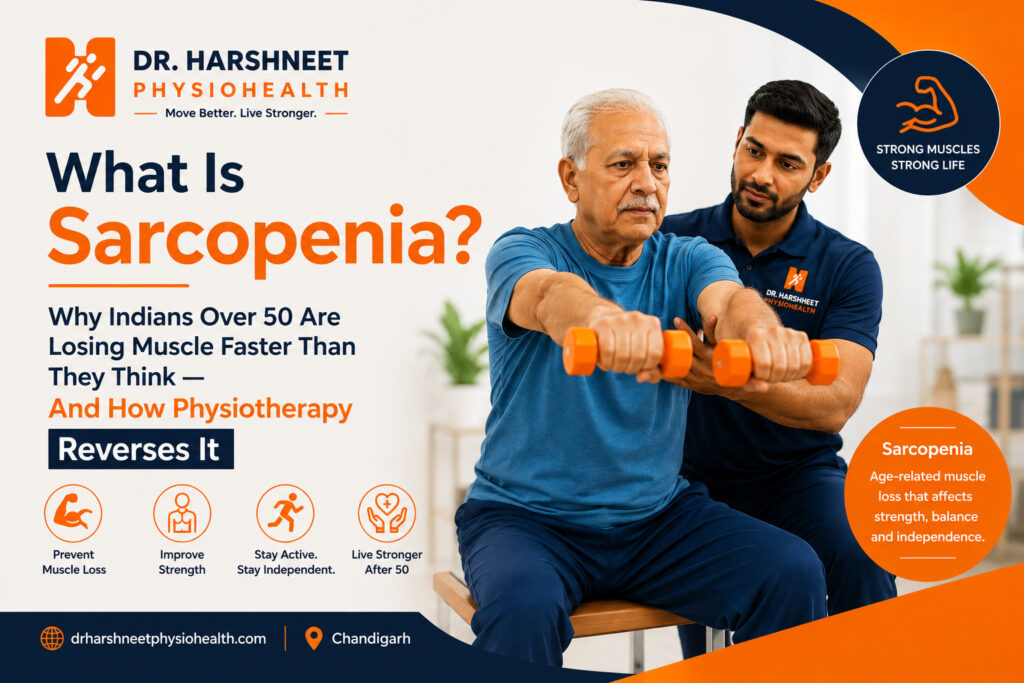
What Is Sarcopenia? Why Indians Over 50 Are Losing Muscle Faster Than They Think — And How Physiotherapy Reverses It
Most people in India assume that losing strength, slowing down, or feeling “weak with age” is natural. It’s not. What they are experiencing is often sarcopenia—a progressive loss of muscle mass and function that starts as early as the 40s and accelerates after 50. The problem is not just ageing. It’s silent muscle degeneration, and most people don’t realise it until it begins affecting daily life—difficulty climbing stairs, getting up from a chair, or maintaining balance. This is exactly why awareness around Sarcopenia Management in Chandigarh is becoming increasingly important, especially as more adults begin experiencing mobility decline much earlier than expected. What Exactly Is Sarcopenia? Sarcopenia is a clinical condition where the body gradually loses skeletal muscle mass, strength, and endurance. It is now recognised globally as a major contributor to disability in older adults. In simple terms: But here’s what makes it dangerous—it doesn’t feel dramatic at first. It creeps in slowly. Why Indians Are More Prone to Early Muscle Loss There’s a pattern physiotherapists across India are noticing—patients in their 50s presenting with muscle profiles similar to Western patients in their late 60s. This happens due to a combination of factors: 1. Low Protein DietsTraditional Indian diets are often carb-heavy and protein-deficient. Muscle maintenance requires adequate protein, which many adults don’t consume consistently. 2. Sedentary LifestyleFrom desk jobs to reduced physical activity post-retirement, muscles simply aren’t being used enough to stay strong. 3. Vitamin DeficienciesLow Vitamin D and B12 levels—common in India—directly impact muscle health and nerve function. 4. Cultural MindsetThere’s a deep-rooted belief that ageing means slowing down. So people stop challenging their bodies physically—exactly when they need it the most. Early Signs You Should Not Ignore Sarcopenia doesn’t announce itself loudly. But the body gives subtle warnings: If these signs are ignored, it leads to frailty, increased fall risk, and loss of independence. Can Sarcopenia Be Reversed? This is where most people get it wrong. They assume muscle loss is permanent. It’s not. With the right intervention, especially physiotherapy-led strength training, muscle mass and function can be rebuilt—even after 60. Modern approaches to Sarcopenia treatment in Chandigarh now focus not only on symptom management but on rebuilding strength and restoring functional independence. How Physiotherapy Actually Reverses Muscle Loss Unlike general gym workouts, physiotherapy focuses on targeted, progressive, and medically guided muscle activation. Here’s how it works: 1. Resistance Training (But Personalised)A physiotherapist designs strength programs based on your current muscle capacity, joint health, and medical history. 2. Neuromuscular Re-educationSometimes muscles are not just weak—they are poorly activated. Therapy retrains the brain-muscle connection. 3. Balance & Stability TrainingPrevents falls, which are one of the biggest risks associated with sarcopenia. 4. Functional Strength BuildingExercises mimic real-life movements—sitting, standing, walking—so improvement translates directly into daily life. Why Self-Exercise Is Not Enough Many patients say, “I walk daily.” Walking is good—but it is not enough to stop muscle loss. Sarcopenia requires: Without this, muscle degeneration continues silently. The Bigger Risk: Loss of Independence Sarcopenia is not just about weakness. It’s about what comes next. This is why early intervention matters. What You Can Start Doing Today If you’re over 50—or even approaching it—this is your signal to act early: At Dr. Harshneet Physio Health, the focus is not just pain relief—but restoring strength, movement confidence, and long-term physical independence through evidence-based physiotherapy care. Final Thought Ageing is inevitable. Muscle loss is not. Sarcopenia is one of the most overlooked health issues in India today—not because it’s rare, but because it’s misunderstood. The good news?With the right physiotherapy approach, you can rebuild strength, restore balance, and maintain independence well into your later years. Good—let’s carry the same voice forward: clinical authority, slightly contrarian, and built for patient trust + conversions.